I’ve defended online privacy and free speech against growing threats for decades now. And during this time I’ve seen how small policy changes can gradually erode the personal liberties we all take for granted in our daily lives.
Today I’m writing as someone who transitioned from big tech to carry out independent work protecting individuals, dissidents, and families from surveillance and censorship. My goal here is straightforward: To give you a clear picture of what’s happening to to your godgiven rights, without spin or overload.
We’ll focus mainly on North America and Europe, with brief notes on Asia and South America, so you can see the emerging patterns of ‘Freedom Erosion’ and consider practical next steps to take against them.
Jump to Section:
- North America
- Europe
- Asia/South America
- Connecting the Dots
- Practical Steps For Defense
- This Is Important
North America: Speech, Travel, and Everyday Privacy at Risk
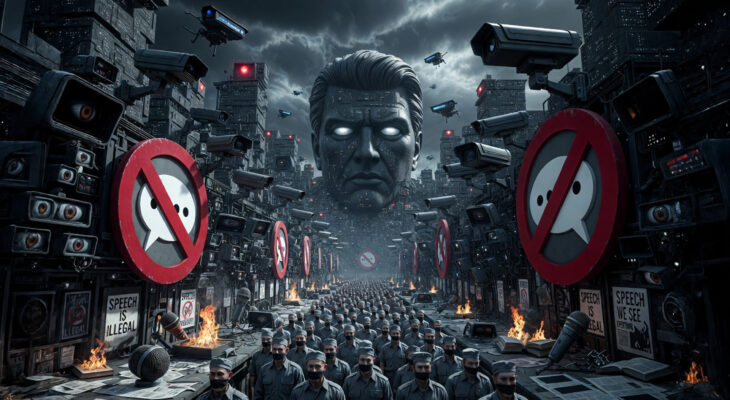
In the US and Canada, we’re seeing an expansion of measures that punish dissent rather than debate it. Independent reporting highlights campus crackdowns, financial restrictions on certain voices, and legislative ideas (like bills that could strip travel rights or passports based on expressed opinions) that are, for want of a better term “Thought Police” approaches. Surveillance tools, including through immigration and enforcement agencies, are being applied more broadly to critics and dissenters.
What ostensibly began as targeted monitoring of perceived threats has now broadened to include everyday criticism of the system, independent researchers, or even ordinary citizens expressing dissenting views online or in public. This pattern is on the rise in North America, where tools originally meant for border security or law enforcement are being repurposed for broader surveillance.
Consider recent reports on ICE (Immigration and Customs Enforcement) and related tools in the US. Details have emerged about secret use of these systems to monitor and expose critics, including anonymous individuals whose data was accessed during broader “security” sweeps.
From my experience: These aren’t abstract threats.
I’ve too often witnessed how such environments suppress open conversation and complicate life for dissenters and free-thinkers, whether planning international travel, managing online reputations, or simply researching investments.
For those still building careers or retirees enjoying well-earned freedom, unexpected barriers to movement or banking access can disrupt family security or retirement plans. In today’s K-shaped economy, where winners pull ahead while others face headwinds, protecting your privacy becomes essential for maintaining independence.
Europe: Digital Rules That Invade Your Private Life
Across the EU, initiatives like the Digital Services Act and “Chat Control” proposals are advancing mass scanning of private messages and stricter online moderation. There are reports of sanctions on officials tied to speech policies, use of “lawfare” mechanisms against opposition groups, and pushes for digital IDs. Intelligence coordination is increasing, allowing the government to determine what’s “acceptable speech” and what’s labeled “disinformation/misinformation”.
Real-world impact: Having helped clients navigate the increasingly tightening net of European regulations, I can tell you that these tools are ALWAYS sold to the populace with overtly good intentions (safety, ,child-protection, crime-fighting, etc.) but then quickly expand to monitor ordinary citizens on a 24/7 basis. If you have family ties, investments, or travel plans in Europe, this cyber dragnet affects your digital footprint and access to diverse information.
And for those not wanting to be “put on lists” for Wrongthink it means more self-censorship in emails or searches, and more effort and discipline in order to stay informed on economics, health sovereignty, or geopolitics.
Decentralized alternatives become vital when centralized systems prioritize control over personal rights.
Broader Patterns in Asia and South America
The same dynamics are appearing globally. In Asia, particularly China, advanced digital surveillance, exit bans, and AI-driven controls limit freedom of expression and movement, with technologies exported via initiatives like the Digital Silk Road. This influences global supply chains and privacy standards that touch all of us, no matter where we live.
In South America, prolonged states of emergency suspend basic rights like assembly and privacy in the name of fighting crime, while new intelligence laws expand surveillance powers (with AI risks noted in places like Mexico). For those with regional connections or retirement interests, this underscores the need for increasingly robust personal protections.
Connecting the Dots: How These Trends Affect Your Life
From decades in the trenches, here’s the bottom line: These developments have already significantly eroded the individual space we’ve taken for granted, and they’re marching on relentlessly, impacting:
- Daily Privacy: It’s harder than ever to communicate, research, or travel without leaving a digital surveillance trail.
- Financial and Personal Security: In uncertain economic resets, restrictions hit the unprepared and complicate independent strategies, thus necessitating increased creativity, diversification, and security.
- Informed Agency/Sovereignty: Less access to unfiltered news and views makes it tougher to position and prepare you and your loved ones wisely; whether in tokenized assets, health choices, or regional/international issues and opportunities.
The pattern is obvious: Security pretexts are expanding surveillance and narrative control worldwide at an increasing rate. But history shows that aware, resilient individuals can safeguard themselves and push back effectively.
Practical Steps Grounded in Real Defense Work
You don’t need to become an expert overnight. Start small:
- Harden the Basics: Use strong, unique passwords with a reliable password manager or preferably a notebook and pen; enable two-factor authentication everywhere. These steps alone hugely decrease the risk of breaches or hacks into your finances or files.
- Privacy Tools: Explore decentralized alternatives to communications and secure backups; simple habits will restore control and guard against prying eyes.
- Reputation and Positioning: Monitor your digital footprint; consider strategies for reputation protection/management in a surveilled world.
- Stay Informed Efficiently: Rely on curated, independent sources rather than endless doom scrolling. Focus on how macro events link to and affect your finances, health sovereignty, and family resilience.
At BackToFreedom.co, this is exactly what we build: practical “Keys to Freedom” for privacy, economics, geopolitics, and more, designed for people like you who want clarity without the time sink.
This Is Important
I’ve defended these liberties for decades because they matter not only to me, but for your own everyday lives.
They are not just abstract principles.
The path forward requires vigilance and smart micro-actions. You’re already taking the first one by reading this.
What aspect concerns you most? Travel privacy, digital tools, or economic ripple effects? Ask questions, and I’ll address them directly in future pieces.
Stay sovereign and stay informed.