
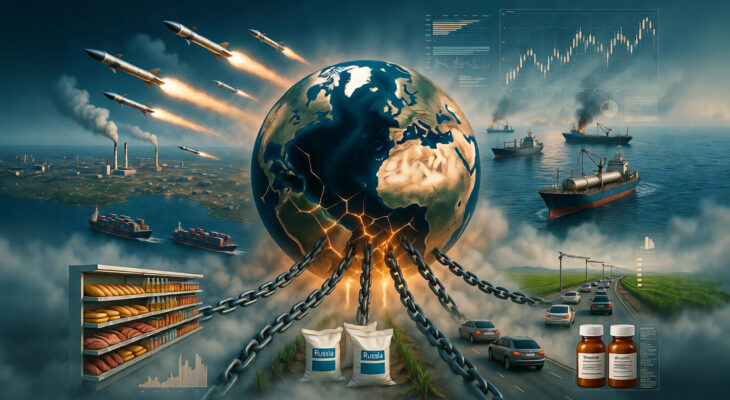
As some of you know, I carry out an almost unhealthy level of geopolitical research and analysis each week. That gives me a level of insight which few people possess.
With that said, this report is drawn from recent high-level discussions among military experts, former intelligence officers, and diplomats, as well as BTF’s own analyses. The data, as well as the relevant discussions reveal a world in transition: Russia’s decisive shift in Ukraine, persistent US-Iran tensions, and the Trump administration’s unpredictable approach amid increasing Israeli influence.
For readers new to these dynamics, I will explain core concepts plainly before addressing immediate risks and longer-term implications, including supply chain vulnerabilities and potential further escalation.
Jump to Section:
- Core Dynamics
- Breakdown of Developing Vulnerabilities
- A Plausible Scenario
- Detailed List of Shortages
- Overall Predictions
- Final Reflections
Core Dynamics: Russia-Ukraine and the Broader Multipolar Shift
The Russia-Ukraine conflict has entered a new, more intense phase. Russia has long conducted a war of attrition, absorbing Ukrainian and NATO-supplied attacks while slowly advancing. Recent Ukrainian strikes on civilian targets in Luhansk (a teachers’ college killing students) crossed the acceptable threshold to such a degree that Putin’s government now has little choice but to escalate the conflict proportionally, and probably disproportionately.
For the moment Russia has responded with warnings for Western diplomats and personnel to evacuate Kyiv, followed by hypersonic Oreshnik missile strikes on military and intelligence targets.
Key takeaway for geopolitical newcomers: Russia is no longer content with incremental gains.
This marks a watershed in the Ukraine conflict:
Moscow now targets decision-making centers in Kyiv (including sites with Western advisors) and signals readiness for deeper involvement. Russia has rebuilt stockpiles of missiles, artillery, and manpower. This all points to intensified summer campaigns, with a realistic prospect of Russian forces capturing or controlling significant portions of Kyiv by late summer or fall 2026, aiming for unconditional Ukrainian surrender or effective state collapse.
Diplomacy is effectively exhausted.
This fits a larger pattern: strengthened Russia-China alignment (a tectonic shift from Cold War-era rivalry) and Iran’s resilience against US/Israeli pressure. Trump’s personality-driven foreign policy, described by multiple voices as erratic and “agreement-incapable” further complicates de-escalation, particularly with Iran.
Iran-US Tensions and the Strait of Hormuz
Parallel to Ukraine, US-Iran clashes (including drone incidents and speedboat attacks) have disrupted the Strait of Hormuz, through which ~20% of global oil and significant percentages of LNG passes. Indirect talks via intermediaries continue, but no comprehensive deal exists. A fragile understanding on navigation may emerge for economic reasons (China and Russia urging restraint), yet Israeli pressure on the American government to continue the Iran campaign persist while issues like that of the country’s enriched uranium stockpile remain unresolved.
Breakdown of Developing Vulnerabilities: Oil, Fertilizer, and Broader Supply Chains
Escalating disruptions compound existing pressures from sanctions, redirected trade routes, and damaged infrastructure.
Here is a clear breakdown:
Oil and Energy:
- The Hormuz closure (effective since late February 2026) has curtailed 11-14 million barrels per day (b/d) of supply. This is unprecedented in scale.
- Impacts: Brent crude could approach $200/bbl in worst-case prolonged scenarios, triggering a global recession in H2 2026 with GDP growth below 2%. Further, Europe and Asia face the most acute shortages; panic buying and rationing loom.
US strategic reserves offer temporary buffers but will deplete rapidly. Energy prices ripple into transportation, heating, and manufacturing costs worldwide. Imagine for a moment what effect $200 oil will have on the cost of plastic packaging alone.
Fertilizer:
- Russia (and Belarus) dominate global exports of nitrogen, phosphate, and potash fertilizers. Ukraine war disruptions (sanctions, logistics blocks) already spiked prices; Hormuz issues have further constrained LNG feedstocks critical for production.
- Impacts: Developing regions (Africa, parts of Asia, Latin America) suffer most, with fertilizer use potentially dropping sharply. This threatens 2026-2027 harvests, raising food prices and exacerbating food-insecurity for hundreds of millions. Global food supply chains, already strained by Ukrainian grain export issues, mow face these compounded risks.
Prices will remain volatile and inflationary, even with alternative routes emerging slowly.
Manufacturing and Broader Supply Chains:
- Critical materials (neon/krypton from Ukraine for semiconductors; metals and chemicals from Russia) face shortages, hitting automotive, electronics, and defense sectors.
- Logistics rerouting (avoiding Black Sea/Russian airspace/Red Sea) increases costs and delays. European factories contend with energy volatility; global just-in-time models break down.
None of this is just theory. One stark example of this logistics breakdown can be found in the current automotive production cuts and component shortages.
Overall Outlook: These shortages are not isolated. Interconnected effects, like higher energy costs, inflating fertilizer and transport expenditure, create a feedback loop.
Expect inflation, reduced industrial output, and humanitarian strains in import-dependent nations by Q3-Q4 2026, unless rapid de-escalation occurs.
Meanwhile Russia is rapidly gaining leverage as a relatively stable supplier to non-Western markets.
Scenario: Russian Direct Action Against European Arms and Drone Factories
From where I’m standing, Russia has placed European targets “on the table” in response to NATO-supplied deep strikes. With Kyiv strikes by Russia normalized, further escalation is plausible if European arms flows intensify (e.g. Ukrainian drone campaigns backed by British/French/German support.)
Potential Scenario:
Russia could conduct precision strikes (missiles, drones, or special operations) on key European production facilities supporting Ukraine. Targets might include drone assembly sites in Germany, France, UK, Denmark, or components plants in the Baltics/Poland. These would aim to degrade supply without full NATO invocation of Article 5, framed as “counter-terrorism” or retaliation for civilian deaths in Russia/Ukraine. Hybrid elements (cyber, sabotage) would accompany kinetic action to sow division.
Plausible Timeline (Extrapolated:)
- Short-term (June-August 2026:) Warning phase intensifies with more diplomat evacuations and demonstrative strikes. Russia tests European resolve via proxy or limited peripheral actions.
- Medium-term (Late Summer-Fall 2026:) If Ukrainian drone offensives (targeting Russian infrastructure or events like economic forums) succeed, Russia executes targeted factory strikes. Coincides with Russian ground pushes in Ukraine.
- Triggers: Major Western escalation (e.g. long-range strikes deep into Russia) or perceived NATO “red line” crossing.
- Likelihood and Constraints: Russia prefers measured escalation to avoid nuclear risks or unified NATO response. Success depends on US (Trump) restraint, a factor which is unpredictable to say the least. European rearmament is slow and only growing gradually, creating a prolonged window of vulnerability for the EU bloc.
This scenario risks broader war but aligns with Russia’s signaling: “If you play stupid games, you win stupid prizes.“
Detailed Shortages and Inflation Consequences
Drawing from our sources and our own analysis of the escalating Russia-Ukraine war, Iran-US clashes in the Strait of Hormuz, and related sanctions/logistics breakdowns we predict that these are creating progressive supply shocks. Russia’s dominance in energy and fertilizers, combined with disrupted trade routes (Black Sea, Hormuz,) redirected shipping, and manufacturing constraints (e.g. Ukrainian neon for chips,) points to severe pressure on global manufacturing and supply chains. Trump’s growing unpredictability and an increasing potential for European factory strikes add further risk to this already volatile situation.
Below is a prioritized list of ten everyday items most vulnerable to shortages or sharp price spikes (hyperinflation in affected regions) through late 2026.
Energy and Fuel-Dependent Items
- Gasoline, Diesel, And Engine Oil
Direct impact from Hormuz disruptions (~20% of global oil) and Russian export constraints. Prices could easily surge 50-150% in Europe and Asia, with rationing possible in import-heavy nations.
Everyday effect: Higher commuting, transport, and goods delivery costs. - Natural Gas and Heating Oil
Russia is a key supplier; European sanctions and redirected flows already strain supplies. Winter 2026-2027 could see severe shortages, driving hyperinflation in utility bills across Europe.
Everyday effect: Households in colder climates will feel this acutely. - Plastics and Plastic Goods (e.g. packaging, bottles, bags, household items)
Petroleum-based; oil shocks ripple outward into manufacturing immediately. Such production slowdowns will cause shortages in consumer packaging, toys, and containers, inflating prices for groceries and retail goods.
Everyday effect: Massive price rises in daily/weekly shopping expenses
Food and Agriculture Items
- Bread, Wheat Flour, and Baked Goods
Ukrainian grain exports have already been massively disrupted and now we add Russian/Belarusian fertilizer shortages into this mix. The overall result is that 2026-2027 will harvests face major yield drops.
Everyday effect: Expect 30-100%+ price increases globally, with acute shortages in Middle East/Africa/parts of Asia. - Cooking Oils and Vegetable Fats
Tied to energy costs, fertilizer-driven crop yields (sunflower, palm, soy,) and Black Sea shipping issues. Again, Ukraine and Russia are major exporters of cooking oils. Prices already volatile and poised for further spikes.
Everyday effect: More price rises of around 50-100% in the coming year. - Meat and Dairy Products Higher feed/fertilizer costs in addition to rising energy prices for processing and transport will drive up prices. Consequently livestock farming will suffer reduced output.
Everyday effect: Expect widespread inflation and potential rationing of meat in vulnerable markets.
Manufacturing and Technology Items
- Semiconductors and Consumer Electronics (phones, computers, appliances)
Neon and other rare gases from Ukraine are critical for chip production, as detailed in the link above. Combined with energy costs and potential Russian strikes on European tech factories, shortages will hit consumer tech hard.
Everday effect: Expect severe shipping delays and 25-50%+ price hikes. - Automobiles and Auto Parts (including tires and repairs)
Steel, aluminum, plastics, and electronics all face constraints. Factory slowdowns and higher fuel costs will further reduce availability and inflate used-car/repair markets significantly.
Everyday effect: The cost of owning and running a vehicle will increase dramatically.
Other Daily Essentials
- Fertilizers and Garden/Home Agricultural Supplies
Russia and Belarus supply ~30-40% of global potash/nitrogen requirements. Home gardeners and small farmers will face shortages, further compounding food price inflation downstream. The impact on commercial agriculture will be even greater.
Everyday effect: Progressively worsening food shortages and price inflation - Pharmaceuticals and Basic Medicines (generics, antibiotics, pain relievers)
With chemical feedstock shortages from Russia and Europe, spiking energy costs for manufacturing, and disrupted shipping and logistics, an almost perfect storm arises against the pharmaceuticals market.
Everyday effect: Increasing supply chain fragility will lead to spot shortages and sharp price increases for over-the-counter drugs.
Overall Predictions and Timeline
- Short-term (June-August 2026:) Fuel and imported food items spike first due to Hormuz volatility and summer military campaigns.
- Medium-term (Fall 2026 onward:) Fertilizer shortages hit harvests; manufacturing disruptions (possible European factory strikes) deepen electronics/auto/parts shortages.
- Most Affected Regions: Europe (energy/manufacturing,) Global South (food/fertilizer,) and import-dependent economies such as island nations (Cyprus, Malta, Canary Islands, etc.)
- Mitigation Factors: Some rerouting, strategic reserves, and non-Western trade (e.g. Russia-China-Iran) may blunt impacts for certain nations and economic blocs, but Western-aligned countries will face the brunt of this, going forward.
Please bear in mind that these extrapolations are based on Russia’s willingness to escalate, the collapse of diplomatic efforts, and the strategic leverage of energy/fertilizer dominance exerted by Russia and Belarus.
Households should prioritize stockpiling non-perishables, becoming more energy efficient, and local sourcing of food and essentials where possible. Geopolitical trends suggest these pressures will persist and potentially worsen absent a major de-escalation of both the Ukrain and the Iran conflicts.
Final Reflections and Recommendations
We are witnessing the erosion of American unipolar dominance. Russia continues to demonstrate resilience and resolve; meanwhile Western strategies reliant on proxies face diminishing returns. Supply disruptions will undoubtedly test global resilience, disproportionately harming the Global South while straining existing western alliances.
For policymakers: Prioritize energy diversification, fertilizer production, localization, and diplomatic off-ramps.
For citizens: Monitor Russian rhetoric closely, as it previews action more often than not. The coming months will determine whether escalation spirals or cooler heads prevail and diplomacy yields a new, uneasy equilibrium.
And always remember… Geopolitics rewards preparation over optimism.