
While it’s still largely overlooked by most geopolitical analysts, the Indo-Pacific is probably the clearest indicator of the emerging multipolar world order.
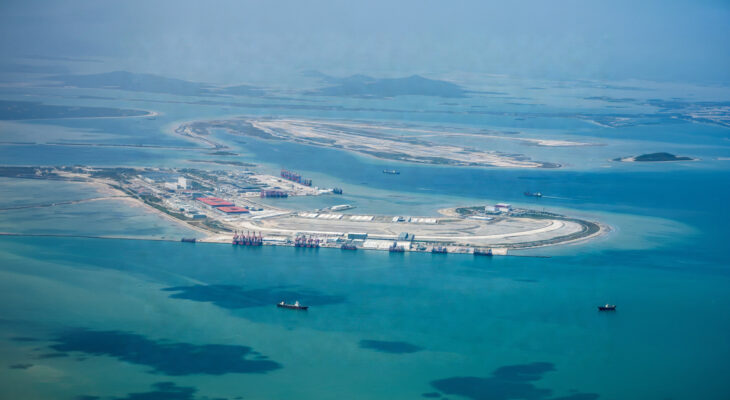
Resource competition over is rife in this region, not just over oil, gas, and rare earths but, more crucially, over fish stocks and fishing rights. Territorial claims also abound, not just around Taiwan, but also the Senkaku/Diaoyu Islands, Kashmir, and even the South China Sea in general with China’s “Great Wall of Sand” island-building project. Technologically, China and India are at each other’s throats, while the USA is racing to insulate the Japanese and South Korean semiconductor sectors from increasing Chinese pressure.
The situation is “complex” to say the least, and it’s likely to produce serious ramifications for the western world before long.
Current Developments
Tensions in the South China Sea remain elevated. Chinese vessels continue “assertive” patrols and encounters with Philippine and Vietnamese forces, while Beijing reinforces its claims on the region through artificial island infrastructure and militia tactics. The U.S. and allies maintain freedom-of-navigation operations, but these have not deterred the Chinese navy’s incremental advances for some time.
In the broader Indo-Pacific, U.S.-China rivalry intensifies on two fronts: critical minerals and advanced technology. China has targeted U.S. companies with sanctions, while disputes over AI and semiconductor supply chains shine a harsh light on the global race for technological supremacy.
Joint exercises involving the Quad (USA, Japan, Australia, India) and expanded bilateral partnerships between Japan and South Korea, as well as Australia and India herald a deliberate effort to build counterbalancing coalitions against Chinese colonial ambitions.
BRICS and Payment Alternatives
These Indo-Pacific dynamics intersect with BRICS efforts to develop alternative payment rails. Proposals for CBDC linkages (like the mBridge Project) among member states aim to facilitate trade outside traditional dollar-controlled systems. Progress here will reduce BRICS vulnerability to Western sanctions but also fragment global finance into competing blocs… another step on the road the multipolar world
Why This Matters To You
The South China Sea carries roughly one-third of all global maritime trade. Any sustained disruption, whether through kinetic incidents or simply through heightened insurance costs, ripples into energy costs, consumer goods prices, and supply chains worldwide. The growing tech and mineral rivalries accelerate regional decoupling, forcing companies and nations to choose sides or build their own parallel systems.
This, in turn will directly affect the price of your electronic devices in the medium and long-term.
Impact on Europe and North America
Europe: Heightened Indo-Pacific tensions exacerbate energy and supply-chain vulnerabilities already strained by the Ukraine conflict. European nations reliant on Asian trade routes face rising shipping costs and potential shortages in electronics and raw materials. This will accelerate EU efforts toward “strategic autonomy” in critical minerals and semiconductors, while also straining budgets already stretched by defense spending and over-the-top green transitions. Countries like Germany and France are likely to see increased pressure to diversify away from Chinese supply chains, potentially slowing or even stopping their economic recoveries.
North America: The U.S. faces direct strategic challenges as it balances commitments in Europe and the Middle East with the increasing need to deter Chinese advances, both economically and technologically. Any escalation vis-a-vis China causes massive rises in defense budgets and serious potential disruptions to consumer electronics and auto industries which are heavily dependent on Chinese parts and technology.
For Canada and Mexico, friendshored supply chains mean higher costs for imported components in the short-term. On the positive side, such friendshoring opportunities will undoubtedly boost North American manufacturing if policies prioritize systemic resilience over unconditional cost-efficiency.
Potential Consequences & Outlook
Short-term: Volatility in commodity prices and shipping costs.
Medium-term: Faster recional/economic bloc technology and resource decoupling, with winners in nations that secure alternative networks.
Longer-term: A more fragmented global economy where sovereignty and diversified partnerships become essential survival tools.
Our advice is that you should monitor these trends closely. Personal resilience, secure communications, diversified assets, and awareness of supply risks — is no longer optional.
Deeper analysis and recommendations for personalized solutions are available in our Keys to Freedom for Seeker and Seer members.