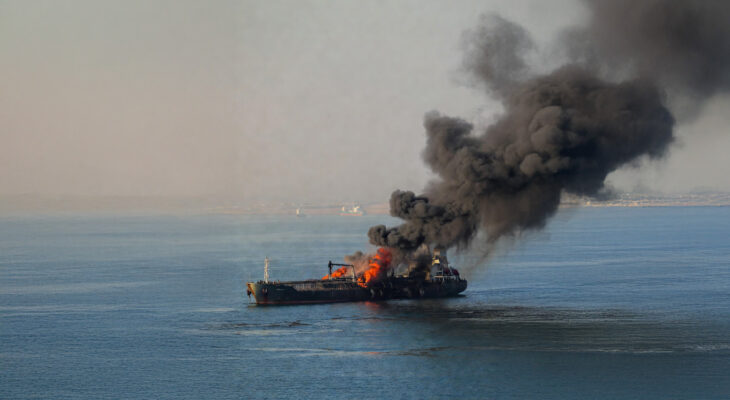
The fighting around Iran and the Strait of Hormuz is disrupting world oil supplies and driving up prices, but its deeper purpose is to smash the old energy-trading system and force a fast switch to “tokenized” finance (digital tokens for oil, money, and debt) run on networks backed by the world’s biggest banks.
For ordinary people, this means higher costs in the short term, wild price swings over the next five to seven years, and a completely new digital economy taking shape while major powers like China and Russia test the balance of global strength.
Strategic Points and Takeaways
- History matters: Modern borders in the Middle East were drawn on maps by Britain and France over 100 years ago. Israel was created in 1948 partly as a homeland for European Jews after World War II and partly as a strategic outpost for Western geopolitical influence. Studying this background even minimally, explains why tensions keep flaring in the Middle East so very persistently.
- Oil is the real prize: The Strait of Hormuz handles one-third of the world’s oil. Disrupting it creates the perfect excuse to rebuild the system of how energy is bought, sold, and shipped.
- Tokenization is the future: Big banks and governments are turning oil trades, money, and even national debt into digital tokens on blockchain networks. The Canton Network and similar structures, as well as stablecoin laws are the main tools of the coming transformation.
- The war speeds everything up: Chaos in the old oil system forces the world to adopt the new tokenized system faster, not because everyone loves it, but because the old one is breaking.
(Standard Hegelian Dialectic: Problem >> Reaction >> Solution) - Prices will swing wildly: Oil could hit $190–$270 VERY soon. Everyday costs will rise. Cryptocurrencies are cheap right now; some see this time as a buying opportunity for massive long term gains.
- Military action will be limited: Troops will protect key spots rather than occupy whole countries. The real fight is about forcing a new global order.
- Geopolitical dominoes: U.S. distraction could trigger moves on Taiwan by China and European expansion by Russia, creating a multipolar world with higher inflation, supply shortages, and new digital power structures that affect jobs and daily prices for everyone.
The main idea here is that every crisis creates both winners and losers. People who understand the coming changes and prepare carefully will come out ahead, while those who ignore the signals stand to lose out on the biggest financial shift in a generation.
The conflict around Iran is not just about who controls a strip of water today.
It is about who will control the digital rules of tomorrow. By forcing the old oil-trading system to crack, the conflict is clearing the way for tokenized energy and finance to become the new normal. Banks that once controlled paper records will now control digital tokens.
Countries that adapt quickly will gain power, while those that resist will fall behind.
For regular families, this means higher costs in the short term but a chance to prosper in a more connected global economy, if they comprehend the new rules in time.
Looking at the Deeper Purpose of the War
While the news headlines are distracting you with explosions, missiles, and warships, a much deeper change is happening behind the scenes. We’ve followed and analyzed the situation closely, and it’s become abundantly clear that this conflict is quietly speeding up the biggest shift in money and energy since the invention of credit cards.
That change is called Tokenization.
In plain English, tokenization means turning real things (like barrels of oil, U.S. dollars, or even government debt) into secure digital “tokens” that live on a computer network. These tokens can be thought of like digital ownership certificates. Instead of signing paper contracts or waiting days for banks to move money, people and countries could trade oil or dollars instantly, 24 hours a day, with everything recorded clearly on a shared digital ledger.
It works a lot like cryptocurrency but is being built and backed by the world’s biggest traditional banks and governments to make it feel safer and more official for the world’s population.
Why does the fighting in the Strait of Hormuz matter so much for Tokenization?
The old way of trading oil depends on paper deals, phone calls between banks, and the U.S. Dollar as the main currency. That system is already getting weaker because many countries want to use other currencies or faster technologies to settle trades.
When conflict disrupts the flow of oil, it creates a perfect moment to switch to a new system of finance and trade. You cannot simply turn off the old system overnight; the chaos of war forces everyone to build and test a brand-new one out of necessity.
This is exactly what is happening now.
A new, recently deployed system with powerful financial and banking support, the Canton Network, is specifically designed for large-scale asset tokenization with configurable privacy at the institutional level… which is to say its privacy features can be turned on and off at will.
Huge American banks such as BNY Mellon, Morgan Stanley, and Goldman Sachs have worked to create it, collaborating closely with the Depository Trust & Clearing Corporation (DTCC).
The DTCC is the giant U.S. company that already holds and moves trillions of dollars in stocks and bonds every day. Europe’s main clearing house, called Euroclear, is expected to join because it is closely linked to the same group of financial institutions. At the same time, new laws in the United States (referred to as the Clarity Act or GENIUS Act) are being enacted to make “Stablecoins” completely official instruments of the financial system. Stablecoins are digital versions of the U.S. dollar that are designed to stay steady in value.
The plan is to move parts of America’s huge government debt onto these stablecoins in the face of rapidly diminishing international demand for US Treasury Bonds.
In simple terms, Stablecoins are “the new buyer on the block” for the bonds that are no longer being bought by international governments and institutions, in order to keep the Dollar powerful even in a fully digitized world.
Russia has already spoken out against this move, calling the strategy “financial terrorism.” They see it as the United States trying to stay in charge by using modern crypto-style technology instead of the old banking rules.
But what surprises many people the most is that Iran itself is rapidly adopting this new digital approach. Many Iranian businesses and even parts of the government already trade with a popular stablecoin called USDT (Tether). They use it to buy satellites, sell drones to other countries, and move money when traditional banks refuse to work with them.
So the current fighting is not about stopping the global tokenization of assets; it is actually pushing the whole planet to adopt it faster.
On the positive side, the switch to tokenization could make international trade faster and cheaper in the long run. A farmer in Brazil could sell soybeans for digital oil tokens and receive payment in seconds instead of weeks. Governments might also find it easier to track money and reduce corruption.
However, the transition will be “bumpy,” to say the least.


2 Replies to “The Iran Oil Crisis: How Fighting Over a Key Sea Passage Will Speed Up “Digital Tokenization” for the New Global Economic System”