
Diesel is already at a record and food prices are next because two valves failed in the same week. The U.S.–Iran war has been choking Hormuz; last week Ansar Allah (theHouthis) took the Red Sea gate and drones from Iraq shut the pipeline that was still getting Saudi crude out through Yanbu. The Persian Gulf consequences you see now now are the pump, the grocery ticket, and the heating bill. What comes next is political: an American midterm election under fuel price stress, a European winter under food and heat stress, and a Saudi regime under threat.
Jump To Section:
- Where We Are
- I Refuse The “Just Yemen” Framing
- Saudi Arabian Government Fall?
- Direct Consequences In Your Prices
- What I Expect
- The Maximalist Take
- Actions You Should Take Now
- The Next 30 Days
- The Bottom Line
- Resource Links
Where We Actually Are
I do not treat the developments this week solely as a “Yemen Story” about a Houthi attack that spilled over. I treat it as the moment the last large oil valve on the Arabian Peninsula was forcibly closed. Iran has already kept Hormuz constrained for most of 2026.
Now, in the second week of September, Ansar Allah took Mocha and the strategic islands inside Bab al-Mandab. Then, on September 10th/11th, drones from Iraqi territory also hit pumping stations on the East–West Crude Oil Pipeline, the workaround that let Riyadh move oil to Yanbu without using the Gulf.
Those three facts are the event. Everything else is simply consequence.
What I Take As Established
| Item | My reading |
| Mocha / Mokha | Taken 10 Sept. Tareq Saleh’s coastal base is gone. Reuters · Long War Journal |
| Perim (Mayyun) and Hanish | Taken. The shipping lane runs within a few miles of Perim. This gives them control over that lane, not simply publicity bragging rights. NYT maps |
| Bab al-Mandab heights | Still contested around Al-Madaribah / Kahbub as of today. Aden is the logical next prize if they keep moving. Arab News |
| East–West pipeline | Three pumping stations hit; Iraqi origin; shut 10–11 Sept. Open-source repair talk is 4–6 weeks if parts arrive in a timely fashion. Reuters pumps · BBC Verify |
| What that line was doing | Wartime ramp toward 5–7 mb/d. Yanbu loadings ~3.8–4.1 mb/d in spring, then fell after the July blockade of Saudi-flagged ships. Al Jazeera · AGSI |
| Yanbu buffer | Yanbu loads only what is already in its tanks, and those tanks only hold days of cargo, not weeks. Once that drains, the barrels do not sail unless the pipe is repaired or another route opens. This is serious “missing supply,” not just another war headline. NYT explainer |
| Brent | Near $110 mid-week; back toward $103–104 on 18 Sept on workaround talk and deal hints. I read the dip as paper-market-positioning/spike-selling, not actual relief. NYT energy · Gulf News |
| Distillate | U.S. diesel reached successive national records in the low $6s. California is significantly higher. Jet fuel is the second shock and the one most people will feel as airfares, not as a ticker. |
| Fed, 16 Sept | Unanimous +25 bp to 3.75–4.00%. First hike in three years, into a supply shock. That is the major policy error risk. FOMC · NYT / Warsh |
| Pakistan, public line | 18 Sept: Islamabad will defend Saudi “to any extent.” The August Mecca trilateral pact is real paper. Whether it’s followed by real infantry is a different question. Al Jazeera · AP pact 21 Sept addendum: The same channels now call the Mecca pact an empty shell for Mocha. Paper still exists. Infantry for Tihama still does not. |
Where My Unofficial Sources Come In:
What I use:
- Military and intelligence sources have been giving the same account of how this offensive started, and I use it because the situation on the ground then did what they said it would.
- Ansar Allah did not simply wander onto the Red Sea after an attempt on its leaders. Energy contacts in the Gulf warned in late June that it was preparing to seize Yemen’s southwest coast, the shoreline that sits on the Bab al-Mandab shipping lane between the Red Sea and the Indian Ocean.
In early September it did just that: It took the port of Mocha, Perim island in the strait, and the coastal strip. Officials later described the cause for the Houthi offensive to be a raid on Sanaa airport as an attempt to kill Houthi leaders. That raid, if it ever happened as advertised, does not explain a coastal campaign sources were already discussing in June.
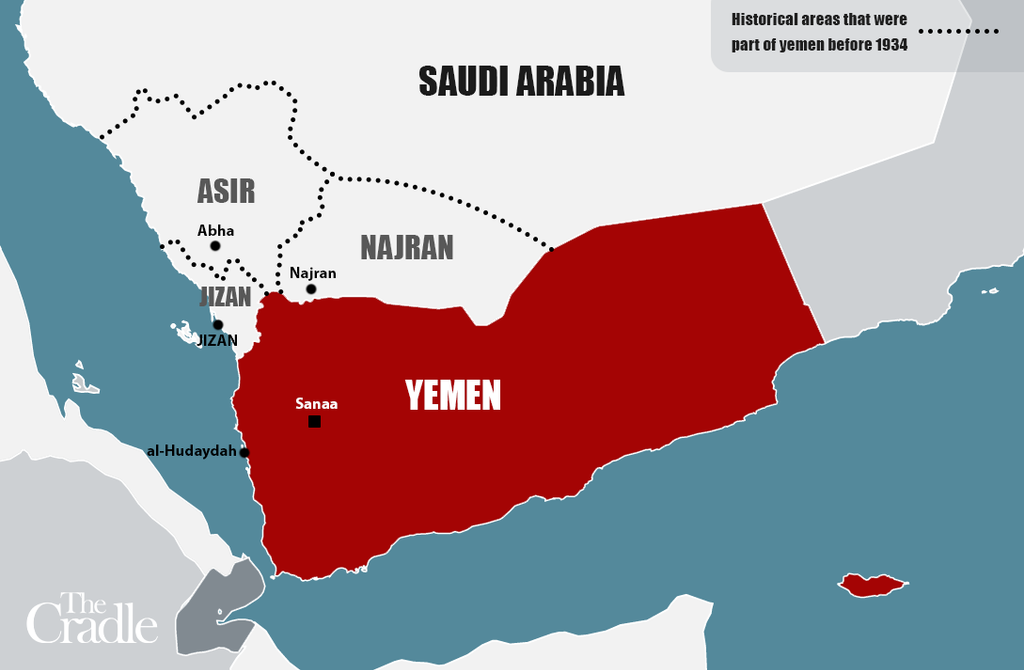
There’s a deeper fight with Saudi Arabia in play here, and it’s much older than Iran’s 1979 revolution. It runs through provinces Britain assigned to Riyadh in 1934, land which Ansar Allah still calls Yemeni. So I accept the “long-planned campaign” framing of the above, and because Saudi-backed units on that coast collapsed in a matter of days.
Forces that fold with such speed were not simply caught by one “surprise” raid.
They were overrun by a campaign built over the course of months.
What is still “shaky:”
- A claimed Saudi F-15 kill remains unconfirmed in the open record. The airframe and location are confirmed. Not so how the plane went down.
- “We control sixty-five percent of Yemen and soon the government” is a Houthi battlefield boast until I see a concise map.
- “Bases completely devastated” is a far stronger claim than I can personally verify with extant satellite imagery.
- A California diesel price near ten dollars is an outlier, not the national average.
- An Iran–Oman “paid Hormuz corridor” is a live development, not a signed, sealed, delivered deal. Political sources themselves noted the Salalah meeting slipped because Riyadh and Manama were not fully onboard with the proposal.
And I will not price a hypothetical supply corridor into my analysis.
Why I Refuse The Media’s “Just Yemen” Framing
Ansar Allah is fighting three wars that happen to use the same units:
- A border war that predates modern Saudi Arabia
- A national-liberation war against the 2015 coalition government
- A 2023–26 campaign against the U.S.–Israeli war architecture.
Iran supplies parts, training, and cover. That is not the same as a joystick in Tehran controlling the actual weaponry, no matter what CNN says. Credible military and intelligence sources who have dealt with the Houthis keep emphasizing their operational independence.
And the open record backs them: Seven years of resistance against the Saudi air war, an indigenous missile and drone manufacturing industry, a unilateral blockade of Saudi shipping from 20 July, and then a successful ground offensive on a Houthi timetable.
The Houthis are FAR MORE capable than the media gives them credit for
The economic meaning here is also simpler than the conflict-theology.
After Hormuz tightened, Riyadh’s remaining large oil valve was the 1,200 km pipeline to Yanbu and then tankers down the Red Sea. Kpler had Bab al-Mandab crude above 7 mb/d in June, much of it Saudi barrels that used to leave Ras Tanura.
Then the Houthis blockaded Saudi-flagged ships. Yanbu loadings fell sharply and the pipeline was hit, from Iraq, not from Sanaa.
That is coordinated pressure even if the shooters wore a different patch.
So the Saudi kingdom is now boxed on three sides: east (Hormuz), west (the pipe and Yanbu), south (Bab al-Mandab and a hostile force sitting on the Saudis’ 1934 claim). Meanwhile, Vision 2030, the tribal stipend system, and the cash that keeps a very large royal family quiet… ALL depend on oil export volumes.
Cut those volumes long enough and this stops being a Saudi foreign-policy problem. It becomes a regime-maintenance problem.
That is the sentence I want our members to remember.
Saudi Arabia: Constriction First, Government Fall Later
I will not use the word “fall” without a ladder
When people ask me whether Saudi Arabia will “fall,” they are usually stacking four different futures on top of each other to produce that outcome. I separate those futures. The probabilities given below are for the next twelve months unless I state otherwise.
| Rung | What I mean | My 12-month odds | What would push it |
| 1. Fiscal freeze | Vision 2030 slips or stops. Economic buffers are used. Possible U.S. Treasury sales. Subsidies1 return as political factors. | High if pipe and Red Sea stay impaired past 6–8 weeks | Already the path if the outage runs through Q4. |
| 2.Mohammed bin Salman (MBS) constrained | He keeps the title and loses autonomy: more family consultation, fewer foreign bets, talks with Tehran and Sanaa he did not want. | Medium-high | Cash reserve stress plus a failed Yemeni air campaign plus no American rescue. |
| 3. Elite fracture | Princes, services, and major tribes stop treating royal succession as settled. Quiet sideline bargains with Iran and Ansar Allah. | Medium | A holy-site (Mekkah, Madinah) terror scare, unpaid stipends/subsidies, and a second infrastructure hit. |
| 4. Territorial unraveling | Riyadh loses effective control on the southern frontier. Hijaz/Asir politics reopen. The border war faces Aden and Najran at once2. | Low–medium | Houthi units cross and hold the 1934 line inside recognized Saudi territory. |
| 5. Regime collapse | The House of Saud is out. Federation, junta, or a messy succession. Aramco becomes a contested asset. | Low this winter. Higher if the dual blockade lasts into 2027 and Mecca looks unprotected | Fiscal breakage, tribal defection, and a shock at a holy site in the same season. |
Rung 5 is the story political and military sources reach for when they talk about Saudi regime collapse, a federated kingdom, and a group of princes who still carry knives.
To be clear: I do not make that my base-case for this winter.
I do treat it as the tail the market has not priced, because pricing it would mean admitting that America’s Fifth Fleet is no longer “the lender of last resort” for Gulf stability.
The mechanisms in play here are older than MBS. The Al Saud regime pays for a “quiet life” and they use oil revenue to make that payment.
When oil cannot leave Saudi Arabia, that payment is threatened.
Tribes do not need an ideology. They just need a season without stipends and a story that “the ruler no longer protects the two holy mosques.” For example, a drone intercepted south of Mecca, even one that never made it into the prohibited airspace, would count as “Holy Ground Under Threat” and cause serious upset.
I watch that aspect more closely than I watch any speech coming from Riyadh.
Why Bombing Does Not Reopen A Pipe
Saudi airpower spent 2015–2022 failing to break Ansar Allah. Military sources now argue that Houthi SAMs are capable of hitting manned fighters, not only drones.
I have not confirmed the F-15’s loss being due to Houthi SAMs, but then again I do not need that kill to make my operational point: A Saudi air campaign that does not retake Mocha and Perim is nothing but theater, and a ground campaign to retake them requires someone else’s infantry, because it’s beyond Riyadh’s military capabilities.
That is why the Saudis went to Islamabad and Ankara for “assurances.”
Publicly, Pakistan said this week it will go “to any extent” to protect Saudi Arabia. Political and military sources on the other side of that conversation say the Pakistanis told Riyadh to read the Mecca agreement’s fine print.
I think both lines can be true.
Islamabad will guard the holy sites and the airbases. I do not expect Pakistani brigades in the Tihama dying for a tribal conflict about a British 1934 border marker. Meanwhile Turkey has the same incentive for action/restraint as Pakistan, so I do not expect Ankara to break stride with Islamabad.
The August trilateral pact is a shield over Riyadh. It is NOT a plan to restore Mocha.
The Only Off-Ramp That Restores Lost Barrels
Political and intelligence sources reported an Iranian government aircraft flying into Riyadh this week.
I cannot name the passenger, but I can name the agenda. MBS desperately needs a Houthi conflict-pause and a usable Hormuz arrangement. Iran, on the other hand, wants the Gulf states to stay out of the next U.S. attack and recognition that the Red Sea supply corridor is no longer Riyadh’s to dictate.
It’s not a settlement. It’s wounded capitals buying time.
The supply-corridor that political sources keep describing: Iran and Oman managing managing transit for “a fee they will not call a toll…” is the only path that puts oil back into the system without Washington having to announce outright defeat. It is also a direct transfer of maritime authority over the Strait from the USA to Iran.
In doing so, Washington would only indirectly admit capitulation because of Oman’s involvement, while the market would simply call it “supply.”
However, I will believe in this supply corridor only when I can read an agreement’s text and see the first escorted transit of oil through Hormuz.
Direct Consequences… Already In Your Prices
Energy and Freight
The Atlantic world has lost, for weeks and maybe months, the land supply-bridge that was substituting the flow of oil for Hormuz. Kpler’s working number after the strike was about 3.6 mb/d at risk, call that about 3–4 percent of demand, if the line stays dark. A month of outage is on the order of 120 million barrels that do not move along that route.
Sure, some of that flow is restored through ship-to-ship transfers near Oman, tank-stock drawdown, extra Russian and U.S. barrels, and shortage-driven demand destruction.
But not all of it…
Diesel and jet fuel are tightening first because refineries and ships will not reset instantly on big words and a press release.
Freight is already a tax on retail prices. MEG–China VLCC rates (the cost to hire a giant crude tanker (two million barrels) from the Persian Gulf to China) have been high enough that freight is already a double-digit share of the delivered barrel’s final price.
Asia pays it first. Europe and North America pay it as pump prices and airfares, with a lag.
That lag is why a “deal headline” next week will not save November’s mid-term election nor Europe’s winter heat woes.
Saudi Cash And The U.S. Treasury Market
A kingdom that cannot export at wartime volumes must draw on reserves, issue debt, cut projects, or sell assets. Economic sources say Treasury sales have started. I have not seen that as a confirmed line item, so I will not print it as fact.
I will, however, watch the official U.S. data on who holds Treasuries. If Riyadh is selling, a country that used to buy America’s long-term debt is shedding it in the same week the Fed is raising rates… which means Washington is looking for new buyers just as a big old buyer steps back.
It becomes a U.S. borrowing problem, not only a Saudi cash problem.
Gulf Politics
Western Saudi business and the smaller monarchies that host American facilities are already slower, so deals take longer now.
Realize that political quiet in those societies was purchased with cheap energy and public-sector jobs.
Remove both those legs and the purchase expires.
I expect stress in Saudi Arabia first, then Bahrain and Kuwait, then (more gradually) the UAE, which still has non-oil buffers. Political sources in the Iranian orbit call the United States “the Gulf’s worst enemy.”
I would put it more tightly: The local monarchies no longer experience a U.S. war with Iran as an American shield. They now experience it as a tax on their own export routes.
That change in perception is the strategic fact.
The Map In Yemen
Whoever holds Mocha, Perim, and the coastal heights owns insurance rates on the Red Sea even if hulls still pass. “Safe except for Saudi vessels” is a political blockade. It is a sufficiently direct threat. A successful push on Aden would erase the recognized government’s last coastal claim. And That fight is already live today.
I treat Aden as the next vital strategic question, not simply as background scenery.
The American Clock
November 3rd is forty-one days away.
Refined product costs/prices lag crude events by four to eight weeks.
A pipeline that only returns in late October does not put cheap diesel into Midwestern tanks before people vote.
A corridor treaty successfully signed next week does not either.
Various sources say Tehran and Beijing will eat pain until after the midterms.
I cannot verify intent but I can verify incentive: The party that owns the war owns the pump.
The Fed’s first hike in three years also landed in the same week as the pipeline outage. Households now pay more for fuel and more for credit at the same time.
That is the crux of the election, whether anyone in Washington wants it to be or not.
Europe’s Food-Energy Belt
The facts speak for themselves in Europe. A second bad season: Drought, no cheap Russian fertilizer, Ukrainian grain shipped by truck, sky-high diesel in the tractor and the ship.
I connect the European file to this one. The harvest problem and this oil shock are on the same bill.
Europe cannot rearm, replace Russian oil and gas, and pay the extra cost of a closed Hormuz and Red Sea without households losing purchasing power. Food prices will move first. Protests will happen second.
Winter 2026–27 is when the household receipt and the street-level sentiment will meet publicly.
What I Expect
Base case: No U.S.–Iran political settlement before the midterms; East–West pipeline repair in 4–8 weeks, not six months.
Bear case: A second infrastructure strike against the Saudis or an airbase, or a U.S. bombing return to Yemen that fails and widens the conflict.
Prices And Politics, Q4 2026 Into 2027
| Variable | My base case | My bear case |
| Brent | $95–120. Dips on public deal talk, rips on the next strike. | Sustained $120–150 if Hormuz stays a trickle and Yanbu stays dark past November. |
| U.S. retail diesel | Elevated through Q4. No return to 2025 levels this year. | New records; spot tightness in farm and trucking regions. |
| Jet fuel / airfares | Second-round inflation into winter travel. Thin routes get cut. | Cancellations on Europe–Asia services that still use Suez/Red Sea oil. |
| European food CPI | Another winter lift in staples. Public blame assigned to “speculators” and farmers. | Rationing language in one or more EU states; farm and anti-war protests merge. |
| Equities | A handful of AI stocks keep the market average up until investors suddenly fear a slowdown. Most other stocks do not follow. | Households spend less if the house and the fuel bill get expensive in the same quarter. |
| Rates | Fed funds to 4.00–4.50% by year-end if inflation stays hot. A public fight with the White House. | Stagflation trap: hike into a supply shock, late pivot after the vote. |
My Expectations By Strategic Theater:
United States
November is a cost-of-living election.
A weakened post-midterm White House is a worse negotiator unless it uses the loss “to declare victory and leave.”
The other path (another Yemen or Iran aggression after the vote) is the highest-risk American choice still on the table.
Force has not reopened Hormuz.
More force against Ansar Allah will not reopen Yanbu.
I do not expect that logic to win the argument inside Washington before the election. I do expect the pump to win the argument on November 3rd.
Europe
The Union cannot do all four jobs at once: rearmament, decarbonization, replacement of Russian molecules, and a wartime freight premium.
Real wages take the residual slack, which is to say “after Brussels spends on guns, green transition, replacement fuel, and wartime shipping, the leftover cost is taken out of what people can actually buy with their pay.”
I do not think Brussels is “finished” as a legal machine.
I do think it is finished as a strategic actor that can impose costs without imposing them on its own voters.
National politics will 15 the European Commission.
Protest and hard-right parties will gain, but they will not automatically deliver a Russia settlement.
This winter is the crucial test for Europe.
Middle East
Two paths…
Path A: An Iran–Oman Hormuz corridor and a “bought” Houthi conflict-pause; some Saudi cash flow returns; MBS’ autonomy is smaller but he’s still seated.
Path B: Another U.S. or Israeli punch that collapses what is left of Gulf energy flow almost instantaneously.
Path A is what Tehran, Beijing, and Moscow can live with. Path B is what the Israel-first circle in Washington still treats as leverage. The region’s odds are ok on A (55–65%,) while B is slightly less likely (35-45%.)
Asia / Oceania
China pays the “freight tax” and waits out Washington on the electoral clock.
Russia sells what Europe pretends it no longer needs: Oil, gas, fertilizer, grain, nuclear fuel.
India just buys the cheapest barrel and ignores the drama.
Australia and Japan pay more for gas and diesel and find that Western speeches about open seas do not sail a tanker to their shores through a closed strait.
Saudi Arabia
Through mid-2027 I am on Rung 1 sliding toward Rung 2 on my table above: A diminished crown prince cutting Vision 2030 and negotiating with people he spent a decade trying to isolate.
Bear case is Rung 3 after a second hit on Yanbu, Ras Tanura, or a holy-site incident the public reads as impotence.
Rung 5 is not my 2026 winter call. It becomes a 2027 question if the dual blockade is still on and the Saudi stipend networks break.
What Would Make Me Change This Outlook
Hormuz traffic gets back to pre-war volumes and stays there.
The East–West pipeline returns to pumping inside three weeks with Yanbu loadings above 3 mb/d.
Ansar Allah is pushed off Perim and Mocha.
A political track that includes Gaza and seized Iranian assets… implemented, not announced.
Any one of those materializing knocks my bear case down.
The Maximalist Take
The refused Pakistani off-ramp, the oil flow staying off through November, and a Saudi payroll running dry are not three separate stories; They are one deliberate sequence.
What the crisis does, is unroll what Davos has so far only described: No single country can still, by itself, keep a strait open, defend its money, or hold its border… and none of the old powers can pay to rescue every flag that fails.
- Hormuz becomes a fee corridor.
- The Red Sea becomes a shipping veto without a UN seat.
- Europe cannot do war, fuel, and food as twenty-seven balanced budgets.
- Saudi Arabia without stable oil revenue is a late payroll powderkeg that calls itself a country.
The WEF-shaped overlay does not need a public announcement: Stakeholder rules, energy scarcity sold as transition, regional blocs instead of national flags. Expensive diesel conditions the public’s consciousness. A paid corridor trains the market to accept higher premiums/costs.
It all looks like separate conflicts, but it’s just one big managed agenda.
There are solid facts at work here, even before a hidden NWO plot:
- Ansar Allah planned the coast offensive.
- The pipeline that was supposed to replace Hormuz is already dead.
- The big summer talks did not become a deal.
- Diesel lags crude, so a headline tomorrow does not cheapen the pump by Election Day.
- The Saudi regime’s quiet life is bought with export cash that is starting to run short.
Factor those realities before you simply dismiss the paragraph above.
Actions You Should Take Now
What you’re after is “Risk Management,” not a trade. Do not speculate on a war. Do not live inside rumor accounts. The objective is to stay solvent and warm if oil and food stay expensive into spring 2027.
North America
- Rebuild cash before you buy a narrative. Three to six months of essential bills in cash, deposits, or short Treasuries beats a hyperbolic metal thesis you cannot eat. The Fed just hiked. Cash yields something. Use it.
- Treat diesel as an input. If you farm, haul, or heat with oil, lock what you can legally lock (a full tank, a prepaid delivery, a co-op buy) on a calendar, not on a panic Saturday after it’s already too late. Gasoline households should still budget a sticky $4+ price-tag.
- Pre-buy the boring food. Staples you already eat, four to eight weeks at least. Freight and diesel hit the grocery ticket well after the crude spike, not with it.
- Kill optional floating-rate debt. The next two FOMC meetings can still go up. Cards and HELOCs are the household margin call. DO NOT refinance a house on a hoped-for pivot before the election.
- Do not confuse the index with the bill. An AI-led S&P can continue to rise while diesel, rent, and insurance eat more of the median paycheck. If you hold oil, gas, or commodity investments, treat them as a hedge against the fuel and food bill: a modest position meant to offset the shock, not a bet sized to get rich.
- Winterize in September. Furnace, weatherstripping, the car, the generator you already own. Heating oil is the domestic end of a Red Sea problem.
- Treat November 3rd as a high volatility date. A sweep either way raises the odds of a lurch: More war, or a “deal” that rips paper oil. Have a plan for both.
- Ignore decapitation lore. The official-sounding story was that the Yemeni escalation began with a raid to “decapitate” the Houthi by killing its leaders at Sanaa airport. Treat it as a story, nothing more. Stories do not determine your bills; facts do. Your barometer is the pump, the heating-oil quote, the grocery ticket, and whether Yanbu loadings resume. Watch them accordingly
Europe
- Assume another winter of expensive fuel. Fill heating-oil tanks. Service the boiler or heat pump now. If you are on district heat, get the Q1 2027 tariff path in writing.
- Food first. Staples, oil, flour, UHT milk, beans. The fertilizer-and-diesel problem is a 2027 harvest problem as well as a 2026 shelf problem. Maintaining a deep pantry is a rational action. Building a doomsday warehouse is not.
- Reprice travel and the commute. Red Sea / Suez plus jet fuel will kill thin air routes. Book refundable tickets. If diesel is your living, join a buying cooperative/group before the next spike.
- Prefer local-currency cash and short government paper to a yield chase. Political instability risk inside the EU is rising exponentially with food prices. Actual liquidity beats forty potential basis points.
- Plan for protest days as logistics. Farmers, haulage, and energy-bill crowds will share streets with anti-war crowds. Factor medicines, cash, a two-day mobility plan
- Fuel: Enough in the tank or a legal can to make a short trip without having to hunt for a pump on a strike day.
- A second route: Not the motorway. Local roads you have already driven.
- A place to go: A friend, a relative, a hotel you can reach if farmers, haulage, or an anti-war crowd close the road you use to get to work or a pharmacy.
- Do not outsource heat to a media narrative. Governments will blame speculators, Russia, and each other. Insulation, a legal secondary heat source, and a bolthole outside the city are the levers you can control.
- Watch fertilizer and farm-gate prices, not just Brent. If you farm or buy from farmers, next year’s harvest is being decided now: fertilizer, diesel, and seed bought this autumn are all factors. When those costs stay high, the 2027 crop shrinks and food prices stay elevated.
That is the European political fuse: Expensive food and angry farmers in the same winter.
- Treat a “peace” headline as volatility signal. A corridor rumor drops paper oil and bounces it back when implementation slips. Watch loadings, not headlines.
What I Am Watching For The Next 30 Days
- Yanbu loadings and a concrete pipeline repair timeline that names parts.
- Aden escalation versus a halt on the Bab al-Mandab heights. Same force. Different file. The first changes who governs Yemen. The second decides whether Yanbu oil can leave.
- Whether the Houthi’s’ F-15 claim appears in the media record or dies there.
- Any Iran–Oman corridor deal, the fee, and whether Riyadh and Manama sign it.
- Saudi reserve and Treasury-holding movements. Words are cheap. TIC data is not.
- Jet-fuel cracks and European gas-storage draws as heating season starts.
- A new U.S. or Israeli strike-package around or after November 3rd.
- Pakistani and Turkish military movements beyond air-base optics: A Mecca Accord shield versus a bluff.
Bottom Line
Ansar Allah has not toppled the House of Saud. It has done something more precise. With a coastal offensive and Iraqi-origin drones, it closed the last large oil valve that let Riyadh pretend Hormuz did not matter. The Saudi monarchy that buys “quiet” for export cash is now short cash.
Kingdoms come apart in this fashion: Not on a single revolution day, but across a winter of unpaid networks, a less autocratic crown prince, and a forced negotiation with enemies he cannot bomb.
I price the base case as Saudi fiscal and political constriction, sticky oil prices in the Atlantic world, and an American midterm election held under a hostile pump-price sign.
I price the tail as a second infrastructure hit and a 2027 Saudi succession crisis.
Act on the base case. Watch the tail; do not live inside it.
Resource Links
• Reuters: Houthis reach Perim; East–West shut after Iraqi-origin attack (11 Sept)
• Reuters: Three pumping stations hit on the East–West line (17 Sept)
• BBC: Saudi shuts pipeline after drones from Iraq (12 Sept)
• BBC Verify: Satellite damage; 4–6 week repair; ~3.6 mb/d at risk (15 Sept)
• NYT: Saudi oil “lifeline” attacked; Yanbu inventories (12 Sept)
• NYT: Pipeline outage and oil-price path (16 Sept)
• NYT: Interactive: Houthi advance and Red Sea shipping (11 Sept)
• Al Jazeera: Can the Houthis close the Red Sea after taking the coast? (11 Sept)
• FDD Long War Journal: Mocha, coast, Perim, East–West shut (14 Sept)
• Arab News: Fighting on heights overlooking Bab al-Mandab (18 Sept)
• AGSI: Limits of Saudi export flexibility after the pipeline hits (18 Sept)
• Kpler: MEG–China VLCC freight at wartime highs (16 Sept)
• Federal Reserve — FOMC statement, +25 bp to 3.75–4.00% (16 Sept)
• NYT: First hike in more than three years (16 Sept)
• Al Jazeera: Pakistan will defend Saudi “to any extent” (18 Sept)
• AP: Saudi–Turkey–Pakistan Mecca defense pact (7 Aug)
• Gulf News: Prices ease on workaround talk and deal hints (18 Sept)
• Wikipedia timeline: 2026 East–West pipeline attack
— End of brief. Next update when Yanbu loadings print or the Aden axis moves. —
1 Energy and water subsidies: the pump and the AC bill kept cheap on purpose
- Citizen Account–style cash: direct transfers so the cut in cheap fuel does not become a riot
- Tribal and network stipends: the older buy: sheikhs, services, and extended family paid on time
- Public-sector wages and make-work: the urban version of the same buy
It is not an economic preference by the regime. It is the state spending what is left of the oil rent on not being challenged while Vision 2023 projects slip. Stipends are the tribal end of that. Subsidies are the household end. Same function.
2 The southern frontier Riyadh would lose: Jizan, Asir (Abha, Khamis Mushait), Najran. That is the 1934 line Ansar Allah still calls Yemeni.
Source: thecradle.co
Territorial snatch-back: Will the Yemen war migrate to Saudi Arabia?
Dotted line = land Britain assigned to Riyadh in 1934. Solid red = Yemen today. If Riyadh “loses effective control on the southern frontier,” it means those three provinces stop taking orders from the center — not that Sanaa annexes them on paper.